Sixty short lessons from forty years behind one fish counter: chlorine versus chloramine, cloudy water that just needs three days, a light timer that starves algae, kitchen food the fish actually eat, and how to read a sick fish before you treat it. No bottle the counter never needed to sell you.
By buying you agree to the Terms of Sale and Refund Policy.
0 people went to checkout in the last 24 hours
PDF · 159 pages · 60 illustrated lessons · read on phone, tablet or computer, or print it

This is for the Tuesday night you're standing over a cloudy tank with a test strip in one hand and three bottles in the other, trying to remember which one the counter actually needed to sell you. It's for the fish you've lost twice already and don't want to lose a third time.
The back of the book indexes 191 symptoms — cloudy water, clamped fins, white dust — each one pointing you to the lesson that explains it, so you search by what you're seeing, not by a chapter you'd have to already know.
Every lesson lists the specific ways people get it wrong, each paired with the sign you're doing it and the fix — not a general warning, the actual mistake, written down.
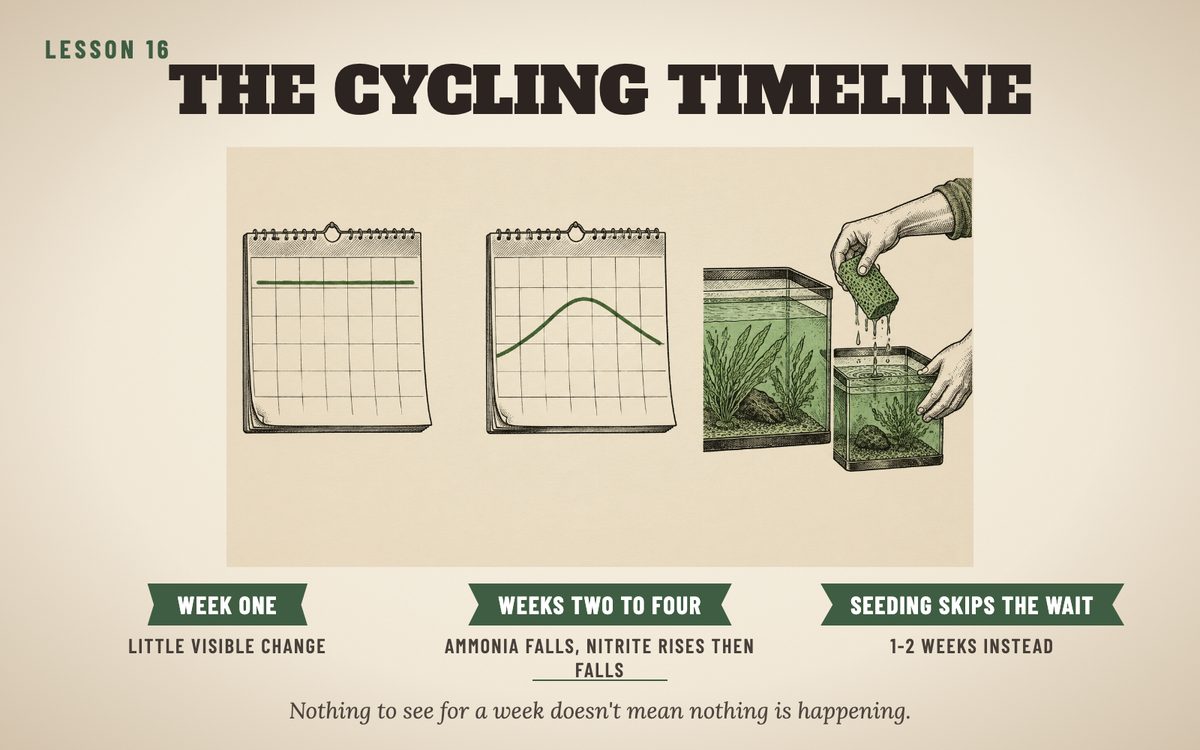
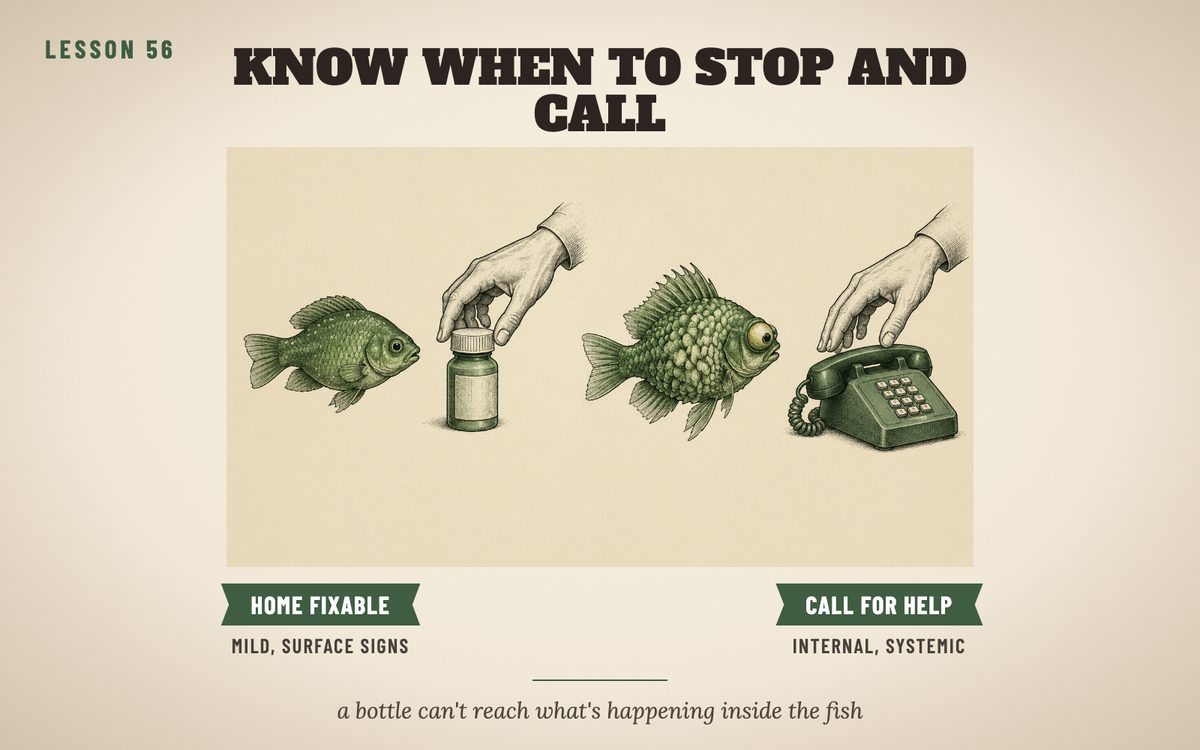
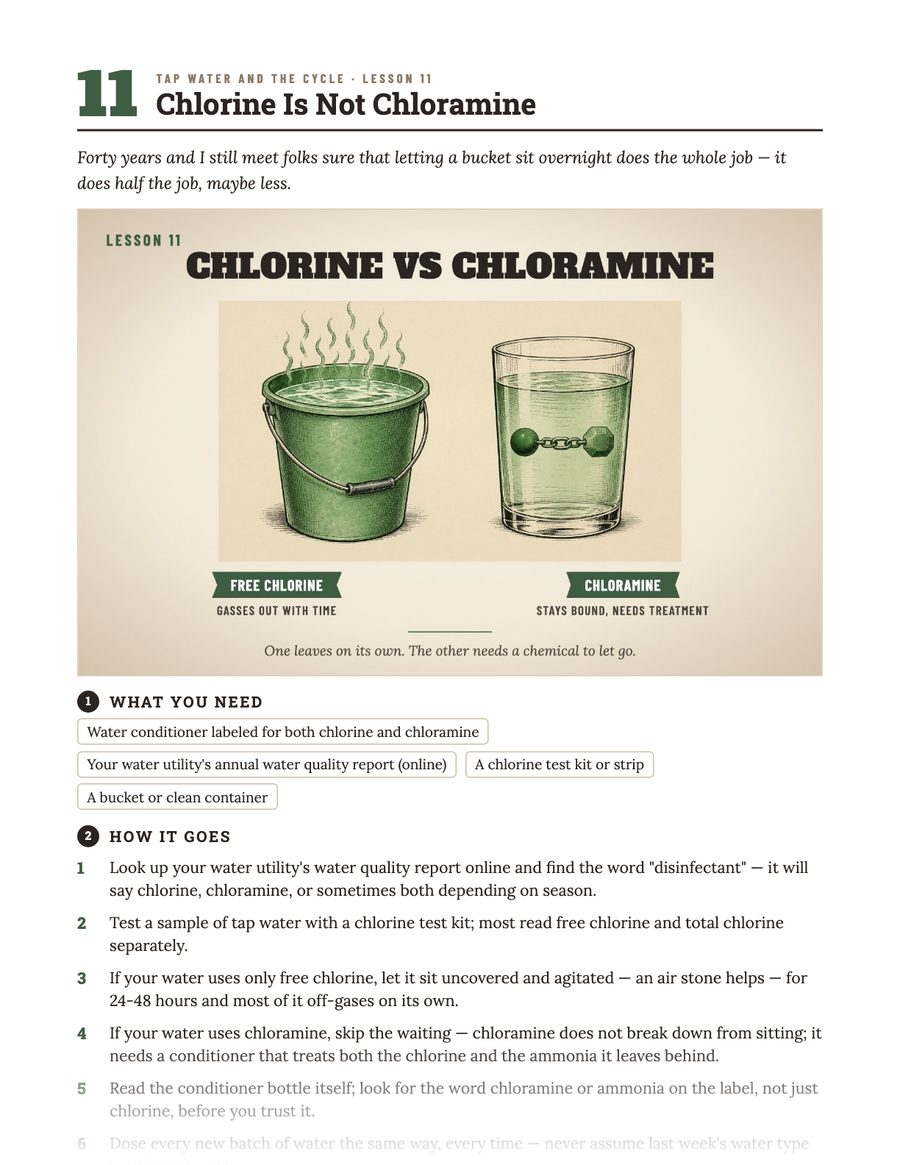
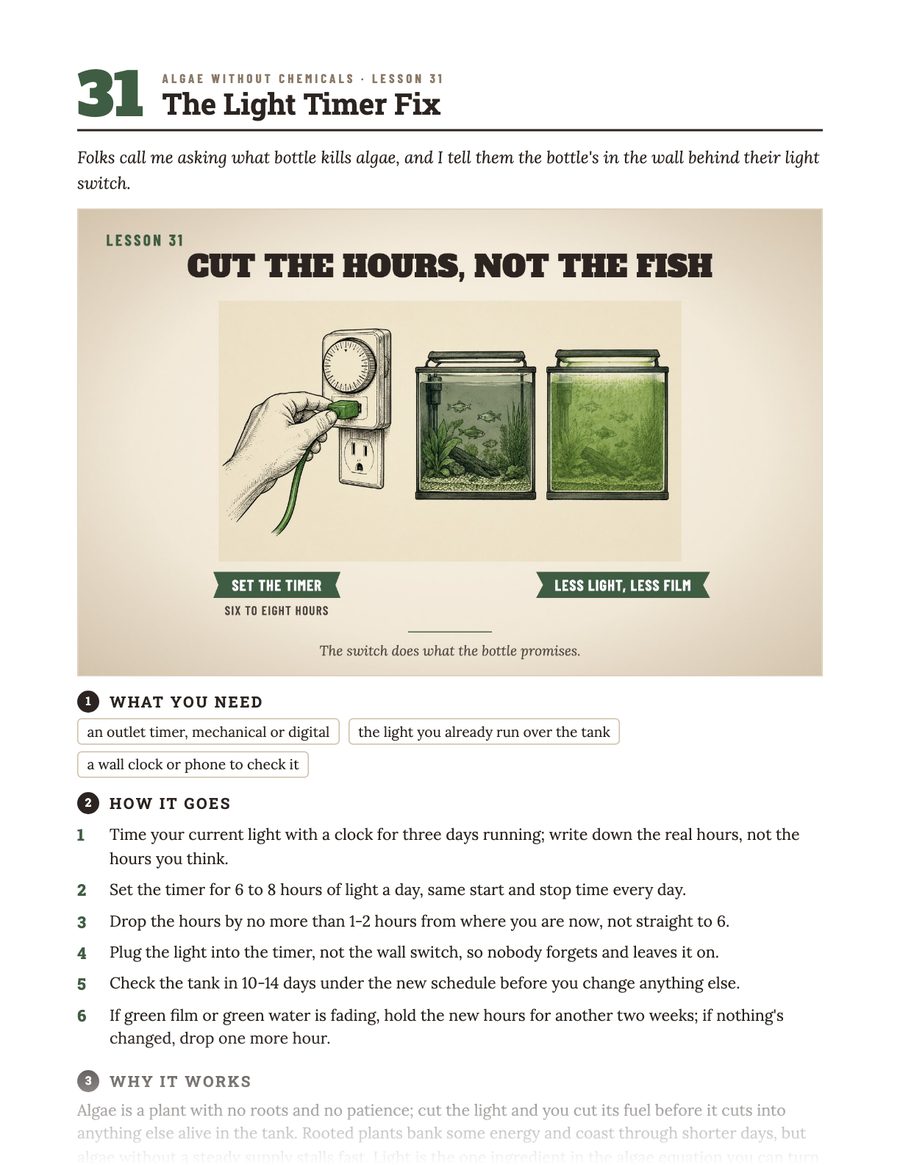
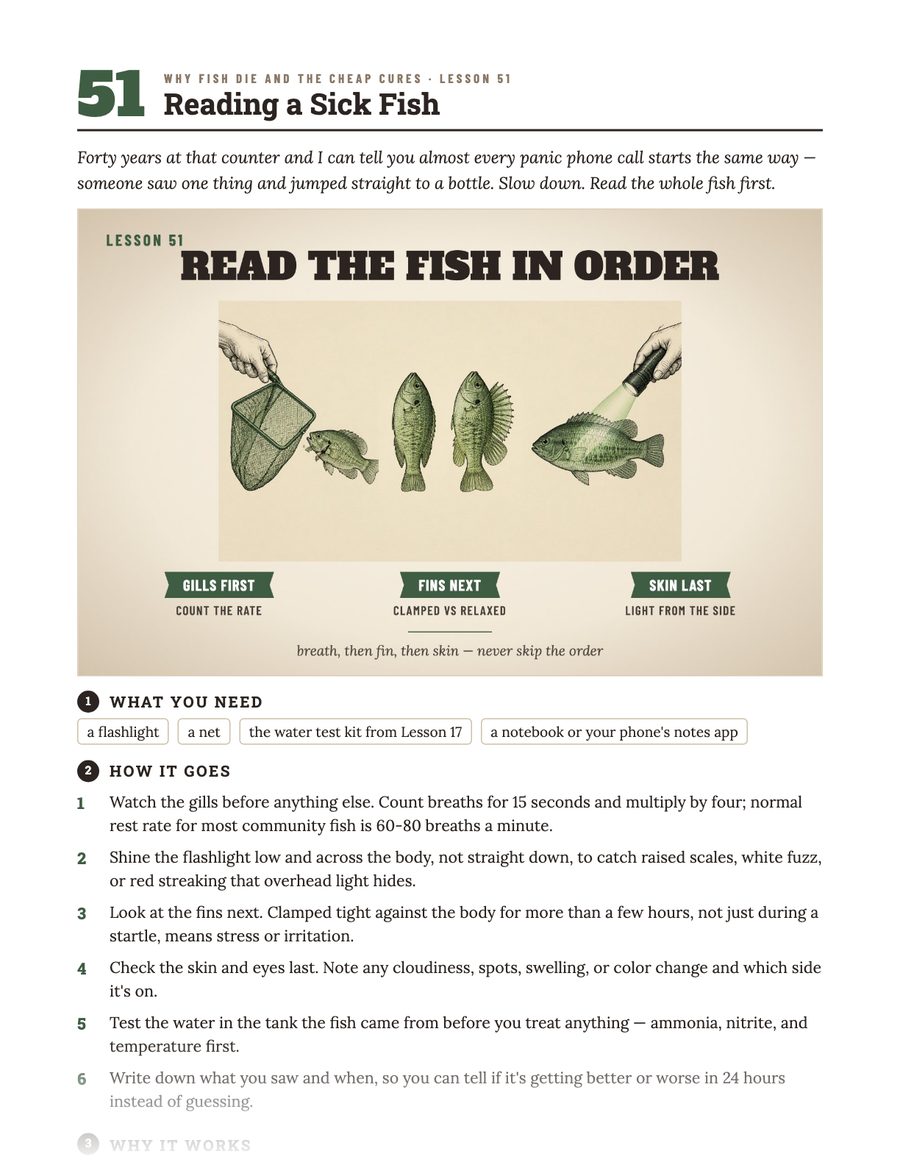
Sixty lessons, sixty drawings — what a bloom, a clamped fin, or a correctly sized filter actually looks like, not just words trying to describe it.
A reference section in back holds the doses, gallons, temperatures, and timings in one place, so you're not flipping back through six sections hunting for a figure you already read once.
A year of bottled algae remover, stress coat, and flake food for one or two tanks typically runs somewhere around $80 to $120 at a pet counter. Most of what this book teaches — a light timer, blanched vegetables, frozen seafood already in the freezer, a quarantine tote instead of a hospital tank — replaces a good chunk of that for the cost of groceries you're buying anyway.
These are typical figures from ordinary pet-store and grocery prices, and they'll vary by store, tank size, and what's already in your kitchen.
Sixty lessons in six sections, in roughly the order Hank would walk you through them leaning on the counter — starting before you own a single fish and ending with the mistakes he watched people make most.
Sixty lessons, sixty drawings, each one showing what the problem or the fix actually looks like, not just describing it in words.


"Somebody ought to type it up before it ends up in a dumpster."
My dad opened that store in 1958, and by the time I took the register in 1978 I'd already answered the same ten questions a thousand times apiece.
I started keeping a notebook behind the register, nothing fancy, just so I'd stop repeating myself out loud all day and start pointing at a page.
Over the years it grew into index cards taped inside the cash drawer, then a binder regulars used to ask to borrow for a weekend.
When I closed the store in 2018, a regular named Carol asked what was going to happen to all that paper.
I told her I didn't know. She said somebody ought to type it up before it ends up in a dumpster.
It took the better part of two years, mostly because I kept stopping to argue with my own old handwriting.
My father never wrote a word of it down himself. He just said it, over and over, until it was in me the way it's in this book now.
I figure if I'd had this notebook at nine years old sweeping that floor, I'd have broken a lot fewer tanks.
— Hank

Hank Brandt was born in 1956 in the apartment above the store his father ran in Marion Falls, Ohio, and he was feeding the stock tanks down there by age nine. He took over the register at twenty-two, in 1978, when his father Walter's heart gave out, and ran Brandt's Aquarium Supply for the next forty years.
He closed the doors in 2018, sold the building, and kept six tanks running at home under one bulb, apron still on out of habit more than need. Over four decades he talked more customers out of the medicine and algae-remover aisle than he ever bothered counting — somewhere past a few thousand, by his own guess.
His voice is plain and a little gruff. He calls you friend or neighbor and explains things like he's got all the time in the world, leaning on a counter that, these days, only exists in his memory.
“The fish don't care what the bottle promises. They care what's actually in the water.”
One PDF: Behind the Fish Counter, 60 lessons across six sections, with 60 drawings, a 191-item symptom index, and a 185-number reference section in back.
The checkout page takes the payment and emails you the PDF directly. No account to set up, no app, no shipping to wait on.
Yes. It's yours to print at home or at a copy shop for your own use at the tank.
No. Hank Brandt is an AI-generated character built for this channel. The methods, the numbers, and the forty-years-behind-a-counter voice are drawn from real fishkeeping practice and checked for accuracy — the man telling it is fiction.
It leans toward plain water and low-chemical fixes throughout, with salt and methylene blue used only where the book says it's safe to, and a clear point where it tells you to stop and call a vet instead (lesson 56). It isn't a substitute for veterinary care when a fish actually needs it.
Thirty days, full refund, no argument. Email the receipt and say it wasn't for you.
Through the checkout page on this site. It handles the card and sends the book straight to your email.
Everything in here is what Hank would've told you for free if you'd stood at the counter long enough to ask.
By buying you agree to the Terms of Sale and Refund Policy.
0 people went to checkout in the last 24 hours